
 A couple of months ago, my twenty-year-old grandson Caleb, being perpetually hungry, was in the kitchen scrounging for something to eat. Having discovered an unclaimed cookie, he was happily munching away when he glanced out the kitchen window into the backyard. His eyes opened wide, his mouth fell open, and he almost dropped his cookie. “Good grief, Opa, what’s that?”
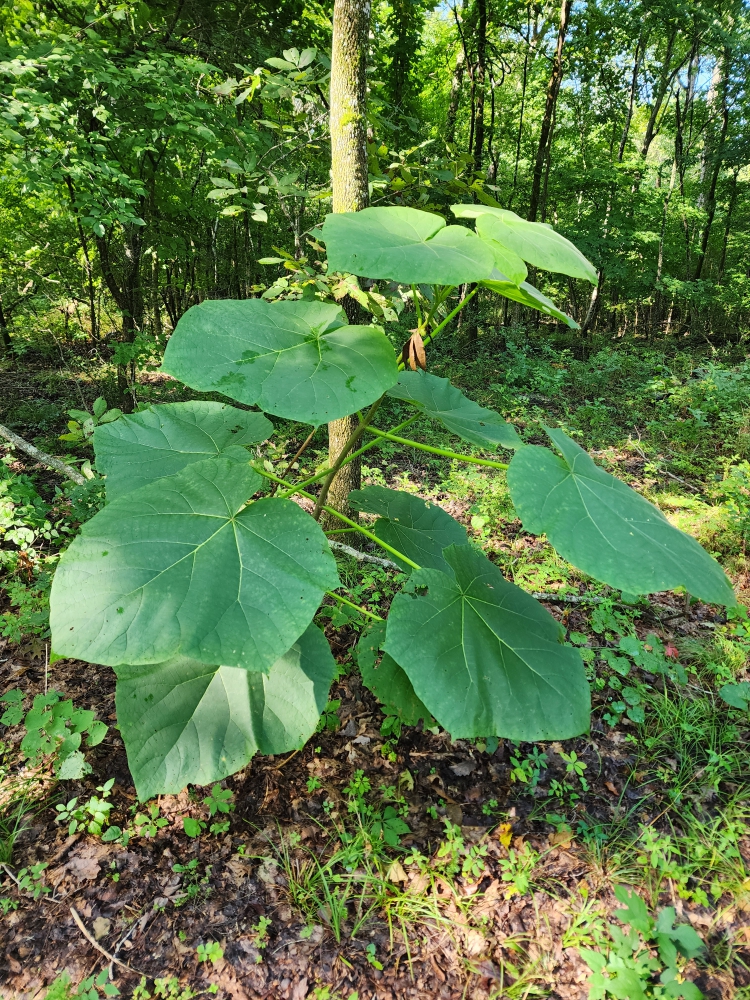
I moved around to see what had so captivated him, especially considering he had a cookie in his hand. It’s rare for anything to divert him when it comes to consuming sustenance. Caleb pointed to a new tree, about six feet tall, growing just along the tree line about forty yards away. It had huge, bright-green leaves, some easily two feet wide.
It was a fiddle-leaf fig tree. Its parent trees were towering a few feet away inside the tree line. They had equally broad leaves but were lost up in the canopy with the hickory, oak, black walnut, and the other trees here on our ridge. Our fiddle-leaf figs produce a fig-like fruit, but it’s not very tasty. I tried one once, and once was enough.
Caleb cocked his head to the side and munched his cookie. I could see his wheels turning. Finally, he asked, “Do you think those are the same kind of fig leaves Adam and Eve used to sew clothes when they realized they were naked?”
Gotta love that boy. That question sparked a conversation about figs, fig trees, and the Bible. We talked for almost twenty minutes—about the Bible no less—which for a twenty-year-old is almost a miracle. In the end, we agreed that these huge fig leaves made a lot more sense for sewing than the much smaller, more common fig leaves.
That young fiddle-leaf fig tree grew from a seed that had found its way either by critter or gravity to a fertile spot at the edge of the tree line. My conversation with Caleb grew from a seed planted years before when we read from his Children’s Bible every night. He remembered the story of Adam and Eve and their struggles with obedience, the apple, and nudity. That long-ago seed eventually grew into a more mature conversation about figs and symbolism in the Bible.
Walking with the Lord means dealing with spiritual seeds—planting, nurturing, growing, and even eventually harvesting. In fact, for me, it is no different than growing a summer vegetable garden; same principles involved. One leads to food for our belly, and the other to food for our soul. And every so often, like with Caleb and the fig leaves, you get to see a spiritual seed you planted years earlier mature before your eyes. All I can do then is simply smile and say, ”Thank You, Father!”
Are you planting seeds and watching for a harvest?


Kevin Spencer likes to play with words, help others play with them, and is privileged to be a staff writer for Christian Devotions. He lives with his beautiful blessing of a wife, Charlotte, and his amazing collegiate grandson, Caleb.